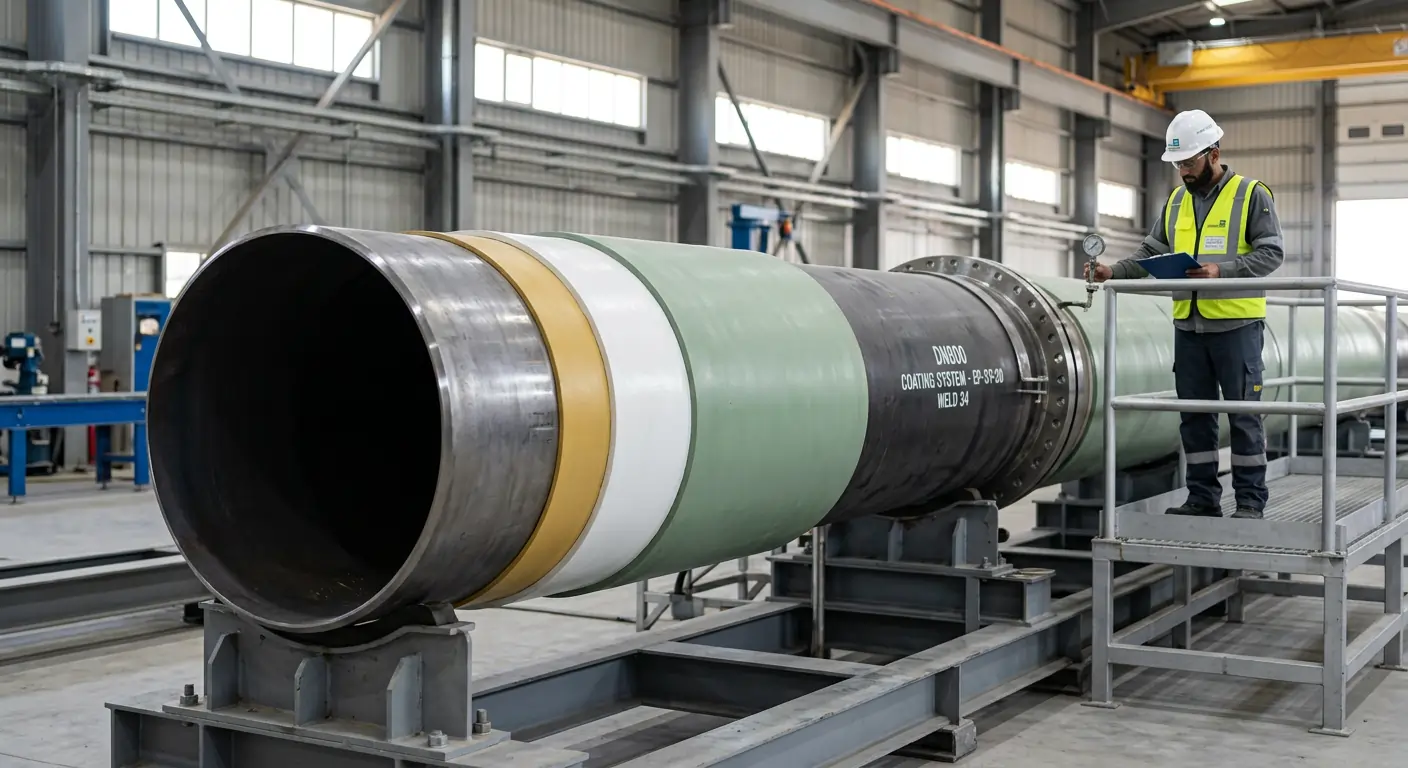
Corrosion is the single largest cause of asset failure in industrial pipeline systems — and in Kuwait's extreme environment, the challenge is amplified. High ambient temperatures, saline groundwater, and corrosive process fluids combine to accelerate degradation at every point in the system. The Middle East and Africa represent 34.7% of the worldwide oil and gas corrosion protection market, and for good reason.
Why Corrosion is Especially Severe in Kuwait
- Ambient temperatures regularly exceed 50°C, accelerating electrochemical reactions.
- Highly saline groundwater and soil create aggressive buried pipe environments.
- Sour service conditions (H₂S) in many upstream applications require specialised material grades.
- Desert dust and UV exposure degrade unprotected surface coatings rapidly.
The Main Anti-Corrosion Systems
Fusion-Bonded Epoxy (FBE) Coatings
FBE is a thermosetting powder applied to heated pipe that melts and fuses to the steel surface, creating a hard, chemically resistant layer. It offers excellent adhesion, strong resistance to cathodic disbondment, and is widely specified by KOC and KNPC. FBE is the first choice for buried transmission pipelines and process piping operating below 110°C.
3-Layer Polyethylene (3LPE) Systems
3LPE starts with an FBE primer bonded to the steel, adds a copolymer adhesive mid-layer, and finishes with a high-density polyethylene (HDPE) outer shell. The result is a system with exceptional mechanical protection, low water absorption, and long design life — typically 25–40 years in buried service. 3LPE is the industry benchmark for long-distance buried pipelines in the Gulf.
Cathodic Protection (CP) Systems
Cathodic protection turns the pipeline into the cathode of an electrochemical cell, arresting corrosion wherever metal is exposed. CP is always used in combination with a coating — the coating handles 99% of protection, while CP guards any holiday or coating defect. Both impressed current CP (ICCP) and sacrificial anode systems are widely used in Kuwait for buried and subsea pipelines.
Composite and Non-Metallic Pipes
Reinforced Thermosetting Resin (RTR) and Reinforced Thermoplastic Pipes (RTP) are increasingly specified as alternatives to carbon steel in corrosion-dominated services — particularly produced water, injection lines, and firewater systems. The Middle East Corrosion Conference 2025 highlighted growing adoption of these systems across the region.
Selecting the Right System: Key Criteria
- Operating temperature and pressure — different coatings have maximum service temperature limits.
- Buried vs. aboveground — buried systems prioritise cathodic disbondment resistance; aboveground systems require UV and thermal stability.
- Process fluid chemistry — sour service, highly saline, or oxidising fluids demand specific coating chemistries.
- Design life requirements — match the system to the project's intended operational life.
- Code compliance — ensure the selected system meets applicable standards (API 5L, NACE SP0169, ISO 21809).
Warah Energy supplies certified anti-corrosion systems including FBE coatings, 3LPE systems, cathodic protection equipment, and corrosion inhibitors — sourced from internationally qualified manufacturers and delivered to project sites across Kuwait.
The Cost of Getting it Wrong
A failed coating on a buried pipeline may not be visible until a leak occurs — by which time the remediation cost, production loss, and safety risk have already multiplied. Investing in the right anti-corrosion system at the design stage is always the more economical choice. Warah Energy recommends involving your corrosion specialist at the procurement stage, not after installation.
