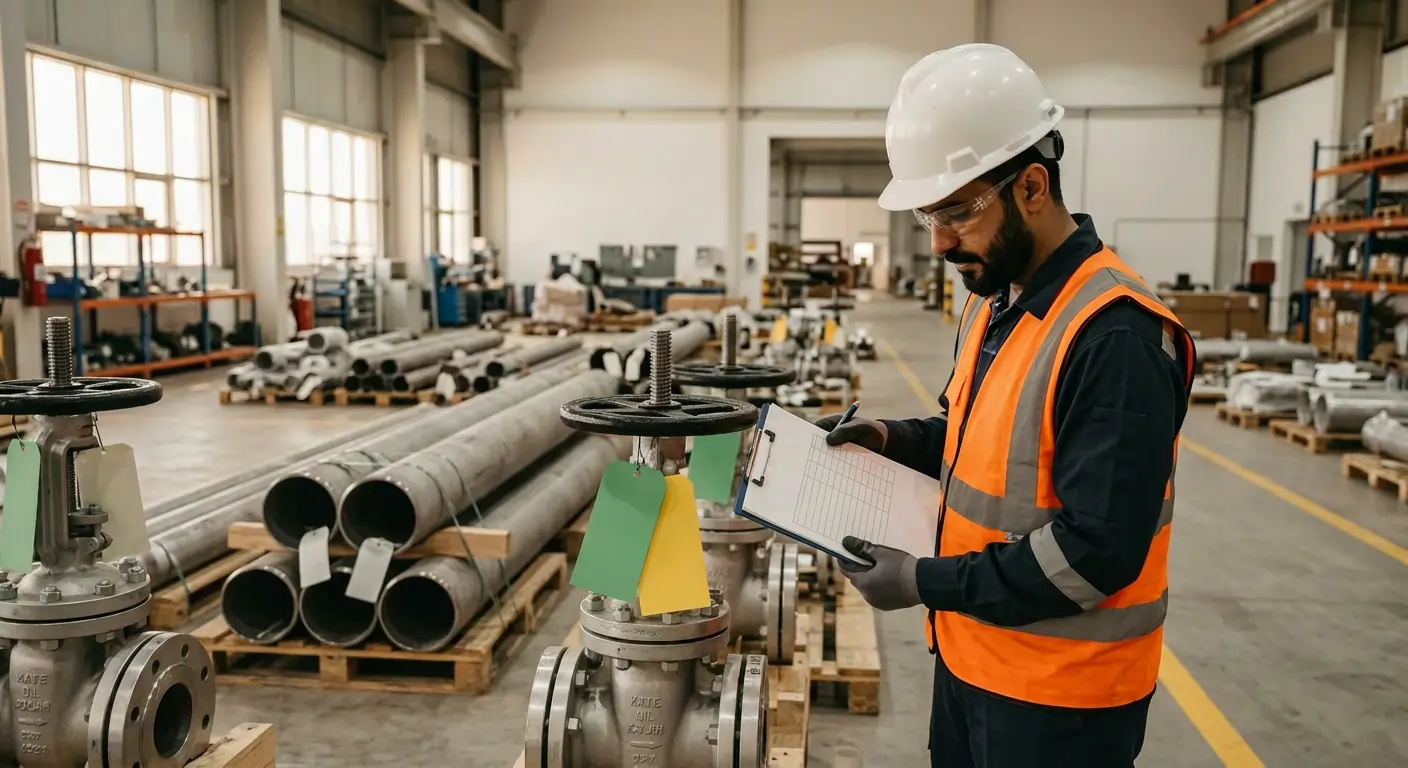
Kuwait's oil and gas sector is undergoing a period of intense capital investment. Kuwait Petroleum Corporation (KPC) is allocating USD 9–10 billion every year through 2030 to offset natural reservoir decline and advance offshore acreage. The result: procurement teams are under enormous pressure to deliver quality materials faster than ever — while navigating complex global supply chains.
The Top Procurement Challenges Facing Kuwait's Energy Sector
1. Extended Global Fabrication Lead Times
Sourcing specialized materials — sour-service pipes, high-temperature separators, subsea trees — from global manufacturers can extend fabrication timelines by six to twelve months. For projects with tight commissioning schedules, this single challenge can derail an entire programme.
2. Dual-Authority Approval Cycles in the Neutral Zone
Kuwait Gulf Oil Company (KGOC) projects operating within the Neutral Zone require bilateral review from both Kuwaiti and Saudi authorities. Every procurement decision is subject to this dual approval process, extending approval cycles by up to two years on some material categories.
3. Quality Assurance and Standards Compliance
International standards — API, ASME, ISO — govern nearly every material used in upstream and downstream operations. Finding suppliers with certified stock that meets both international standards and KOC's internal specifications is a constant challenge, particularly for specialty alloys and anti-corrosion systems.
4. Last-Mile Logistics and Customs Clearance
Even when materials are sourced and fabricated on time, delays in customs clearance and last-mile delivery to remote field locations can cause significant schedule slippage. Reliable logistics coordination is as critical as the procurement process itself.
How to Overcome These Challenges
- Partner with locally established suppliers who maintain pre-qualified vendor lists and bonded inventory for fast-moving items.
- Engage procurement specialists early in the project cycle — ideally at FEED stage — to identify long-lead items and begin sourcing immediately.
- Use a trusted procurement agent with deep knowledge of Kuwait's regulatory environment to navigate Neutral Zone and KOC approval requirements.
- Consolidate purchasing volumes where possible to leverage supplier relationships and secure priority production slots.
- Verify quality certifications upfront and build a document-ready material traceability package to streamline customs clearance.
At Warah Energy, our procurement specialists manage the entire supply lifecycle — from vendor identification and quality verification to customs clearance and on-site delivery. Contact us to discuss your project requirements.
The Digital Transformation Opportunity
Kuwait Oil Company's five-year digital transformation strategy — integrating Cloud and IoT for real-time supply chain management — signals a wider shift. Industrial suppliers who invest in digital tracking, e-catalogue systems, and transparent inventory reporting will gain a decisive competitive edge as operator procurement teams digitise their workflows.
The bottom line: with USD 115 billion in active projects across Kuwait, the procurement ecosystem is more dynamic than it has been in a generation. Companies that build agile, locally grounded supply chains will be the ones that keep projects moving.
