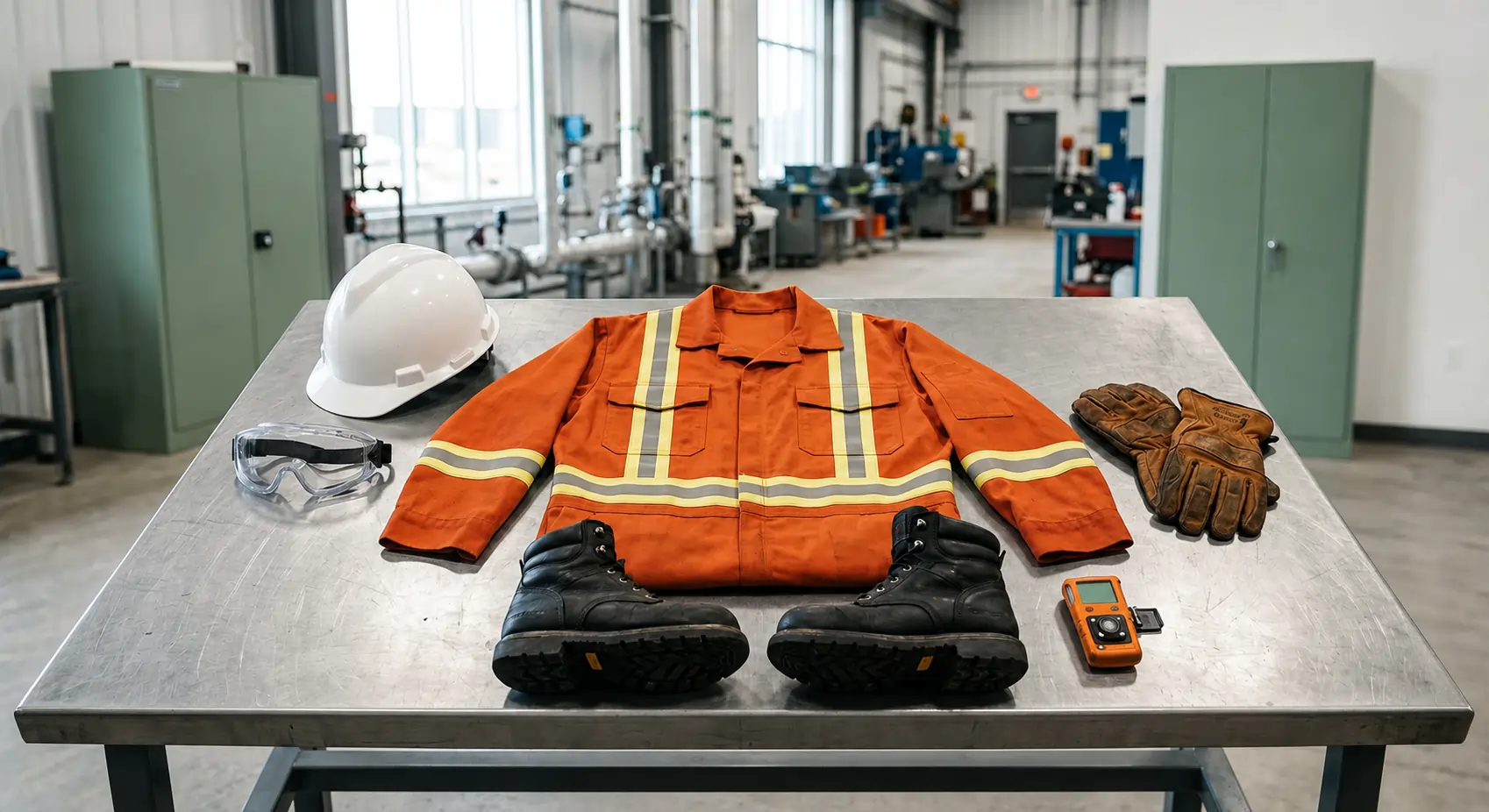
Personal Protective Equipment (PPE) is the last line of defence between a worker and a potentially fatal incident. In Kuwait's oilfield environment — where hazards include hydrocarbon exposure, extreme heat, high-pressure systems, and heavy machinery — PPE selection and compliance are non-negotiable. By 2026, safety expectations have risen, and regulators and operators are actively auditing PPE standards across worksites.
Core PPE Requirements for Kuwait Oilfield Sites
1. Flame-Resistant Clothing (FRC)
FRC coveralls or jacket-and-trouser combinations are arguably the most critical item for oilfield workers. In environments where flash fires or arc flash hazards are present, standard workwear offers no protection. FRC must meet EN 11612 (protection against heat and flame) or equivalent standards. DuPont Nomex and similar fabrics are widely specified by KOC and international operators in Kuwait.
2. Eye and Face Protection
Safety glasses with side shields are the minimum requirement across all oilfield areas. Operations involving chemical handling, pressure testing, or grinding require full-seal chemical goggles or face shields rated to ANSI Z87.1 or EN 166. Regular inspection of lenses for scratches and UV degradation is essential in Kuwait's high-UV environment.
3. Foot Protection
Safety boots with steel or composite impact-resistant toes are mandatory. For chemical or hydrocarbon exposure, neoprene or nitrile construction is recommended. Slip-resistant soles are critical on wet or oil-contaminated surfaces. Boots must meet EN ISO 20345:2022 S3 specification or equivalent.
4. Hearing Protection
Sustained noise above 85 dB(A) — common around drilling rigs, compressors, and pumping stations — requires mandatory hearing protection. Earplugs (SNR 30+) or earmuff-style protectors must be worn. Where both hand dexterity and hearing protection are required simultaneously, banded earplugs are the practical solution.
5. Head Protection
Industrial safety helmets rated to EN 397 or ANSI/ISEA Z89.1 Type I Class E are required across all operational areas. In areas with electrical hazards, Class E (20,000 V dielectric) specification is mandatory. Helmets should be replaced after any impact and every three years regardless of condition.
6. Hand Protection
Glove selection depends on the specific hazard: cut-resistant gloves (EN 388) for material handling, chemical-resistant nitrile or neoprene gloves for chemical exposure, and insulating rubber gloves for electrical work. Never wear gloves near rotating machinery — they can be drawn in.
7. Gas Detection Equipment
Personal gas detectors monitoring H₂S, CO, LEL, and O₂ are increasingly mandated as standard PPE issue for workers in confined spaces and active production areas. Four-gas monitors should be bump-tested before each shift.
Kuwait-Specific Compliance Notes
- KOC, KNPC, and KIPIC each maintain site-specific HSE standards that supplement international requirements — always obtain the operator's approved PPE list before procuring.
- Kuwait's Ministry of Social Affairs and Labour mandates PPE provision by the employer — PPE costs cannot be passed to the worker.
- All PPE supplied for government projects must carry valid third-party certification marks (CE, ANSI, or equivalent).
- Heat stress management is an additional requirement — PPE selection must account for Kuwait's extreme summer temperatures (up to 55°C wet-bulb).
Warah Energy supplies a comprehensive range of HSE and PPE equipment — including FRC coveralls, gas detectors, safety footwear, and fire suppression systems — sourced from certified international manufacturers for Kuwait's oilfield environments.
